
The Pickleball Boom and the Injury Wave Behind It
Written and clinically reviewed by Dr. Ashley Aguero, DC — August 10, 2026
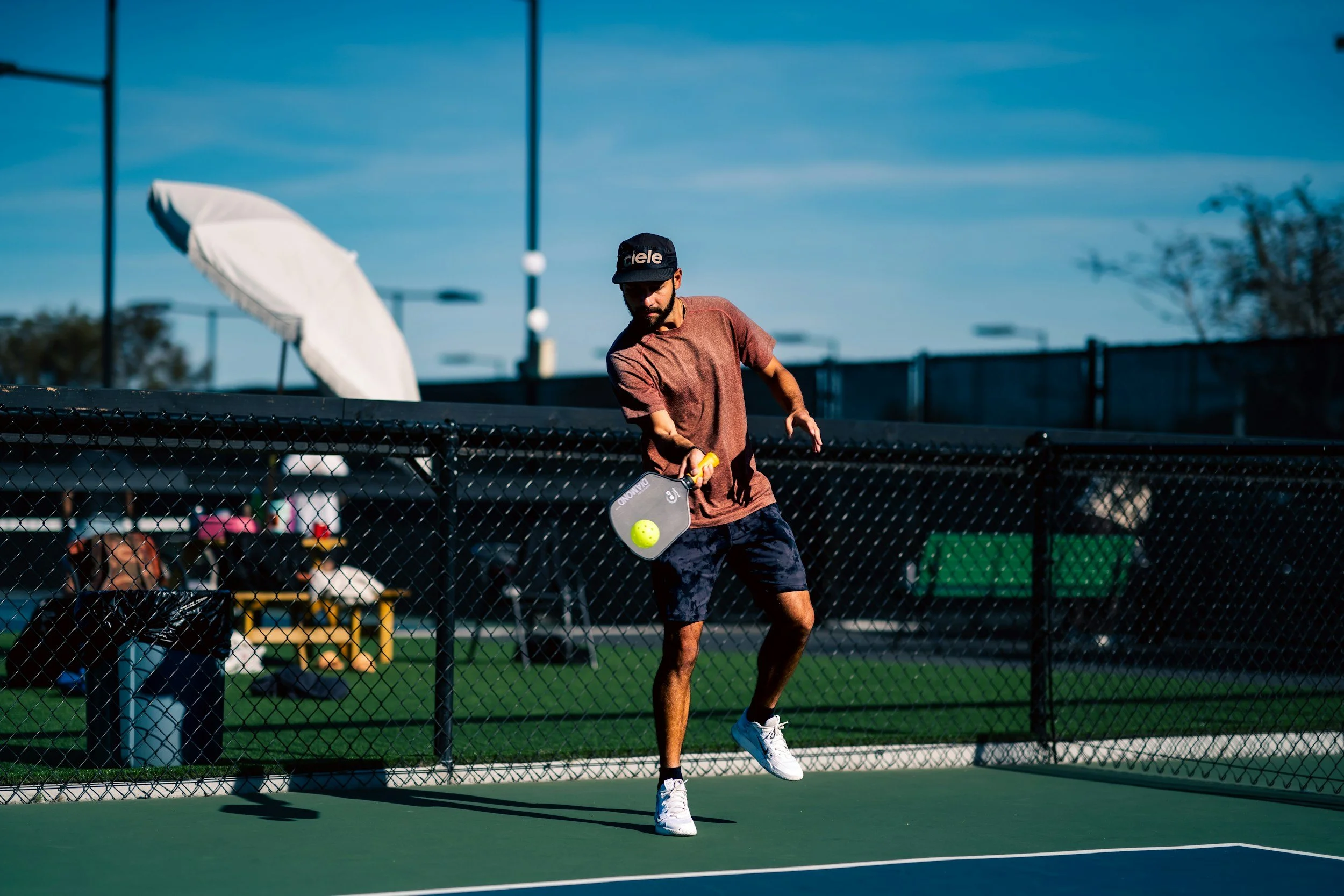
Pickleball has become one of the fastest-growing sports in the country, and San Diego has embraced it — courts are packed with everyone from longtime athletes to people getting back into a sport after years away. I love it. It gets people moving, it's social, and it's genuinely fun. But as a sports chiropractor, I'm also seeing some of the physical demands of the sport walking through the door — especially when playing volume ramps up faster than the body is prepared for.
The Short Answer
Most pickleball complaints I see aren’t from one dramatic moment. The sport asks for fast direction changes, hard braking, reaching, and repetitive arm motion, and symptoms tend to appear when playing volume climbs faster than the body’s current capacity. Elbow, shoulder, calf and Achilles, low back, and knee pain are the usual patterns. Warming up, building off-court strength, and ramping volume gradually go a long way — and early twinges are worth respecting.
Why Does the Pickleball Injury Wave Exist?
Pickleball isn't typically a high-contact sport. The physical demand comes from something different: a lot of quick, repetitive movement. Some new players are picking up a sport that demands quick lateral movement, sudden stops, reaching, and repetitive arm motion without much recent exposure to those movements. Sometimes the enthusiasm simply outruns the conditioning.
You've got a sport that asks the body to change direction fast, brake hard, reach quickly, and repeat those movements for an entire session. When that demand increases faster than someone's current capacity or exposure to those movements, symptoms can start to show up. It's not that pickleball is inherently dangerous — sometimes the workload simply gets ahead of what the body is currently prepared for.
Which Pickleball Injuries Do I See Most?
A handful of patterns come up again and again with pickleball players:
— "Pickleball elbow." It's not a formal diagnosis, but it's an easy way to describe elbow complaints that can show up with repetitive gripping and forearm loading. Pain on the outside of the elbow may be consistent with lateral elbow tendinopathy — often called "tennis elbow" — although not every case of elbow pain has the same cause.
— Shoulder pain. Repeated overhead and reaching motions can add up, particularly when playing volume increases quickly or the shoulder isn't accustomed to that amount of repetitive work.
— Achilles and calf issues. Quick starts, stops, and repeated push-offs place plenty of demand on the calf and Achilles. Symptoms here can range from calf strains and Achilles tendinopathy to more significant injuries like an Achilles rupture.
— Low back pain. Pickleball asks for plenty of bending, reaching, rotation, and quick movement — sometimes for hours at a time. For someone who isn't accustomed to that workload, the low back may be one of the areas that starts speaking up.
— Knee pain. Lateral movement, deceleration, and repeated changes of direction place plenty of demand on the knees — especially when those movements are new or playing volume ramps up quickly.
Notice a theme: many of these complaints aren't coming from one dramatic moment. Repetitive loading, sudden changes in playing volume, previous injuries, strength, recovery, and overall capacity can all play a role.
Why 'Just Push Through It' Isn't Always the Move
Pickleball has a specific trap: it's fun, social, and easy to play often — which can make it easy to underestimate how quickly the workload is adding up. A little elbow twinge is easy to ignore when you're having a great time and want to play again tomorrow. But when symptoms are getting more noticeable while playing volume keeps climbing, it may be worth adjusting the workload instead of repeatedly pushing through.
If symptoms are persistent, worsening, or starting to change how you play, that's a good time to pay attention rather than continuing to pile on more volume.
What Can Management Look Like?
For the pickleball injuries I see, the approach usually blends:
— Soft tissue work — cupping, IASTM, and other manual techniques may be used for symptom management or short-term changes in mobility when appropriate.
— Adjustments where indicated — joint manipulation or mobilization may be incorporated based on the exam findings and how the athlete is presenting.
— Targeted rehab — progressive strength and endurance work helps build capacity for the demands of the sport. Depending on what we find, that might mean forearm work for an elbow complaint, calf loading for an Achilles issue, or hip and trunk work when those areas are relevant.
— Movement and load guidance — sometimes that means temporarily adjusting how often or how intensely you're playing while progressively building your tolerance back up. It doesn't always mean stopping completely.
The theme, as always: hands-on care can be one piece of the plan, but building strength, endurance, and capacity matters too.
How Can You Prepare Your Body for Pickleball?
If you're a San Diego pickleball player who wants to stay on the court, a few things matter more than anything I can do in the clinic. Warm up before you play — a few minutes of movement for the ankles, hips, shoulders, and calves can help prepare your body for what you're about to ask it to do. Your first game probably shouldn't be the warm-up. Build some baseline strength off the court — calf, hip, shoulder, and forearm strength and endurance work can help build capacity for the demands you're putting on them. Ramp up gradually — going from zero to five days a week is a big jump in workload. Give your body some time to adapt as you increase how often and how long you play. And respect the early twinges — if your elbow or Achilles is starting to talk and getting louder every time you play, don't just keep turning up the volume.
Pickleball isn’t the only sport where demand can outpace preparation — volleyball players run into the same pattern, and I’ve broken down volleyball shoulder pain across San Diego’s beach and indoor formats.
The same question comes up in the weight room, where I’ve broken down the four areas that can influence squat depth for San Diego lifters.
Frequently Asked Questions
What is “pickleball elbow”?
It isn’t a formal diagnosis — it’s shorthand for elbow complaints that show up with repetitive gripping and forearm loading. Pain on the outside of the elbow may be consistent with lateral elbow tendinopathy, often called tennis elbow, though not every case of elbow pain has the same cause. That’s why the exam matters more than the nickname.
Do I have to stop playing pickleball?
Not always. Management often means temporarily adjusting how often or how intensely you play while you progressively build tolerance back up, rather than stopping completely. What it shouldn’t mean is ignoring symptoms that are getting more noticeable while your playing volume keeps climbing. If symptoms are persistent, worsening, or changing how you play, that’s the point to pay attention.
I’m new to pickleball. Why am I sore when I never used to be?
Some players are picking up a sport that demands quick lateral movement, sudden stops, reaching, and repetitive arm motion without much recent exposure to those movements. When the demand climbs faster than your current capacity, symptoms can start to show up. It usually isn’t a sign something is wrong with the sport — the workload just got ahead of the preparation.
When should calf or Achilles pain be taken seriously?
Quick starts, stops, and repeated push-offs put real demand on the calf and Achilles, and symptoms there can range from calf strains and Achilles tendinopathy to something as significant as a rupture. A suspected Achilles rupture, inability to bear weight, substantial swelling, or a major loss of function may warrant urgent medical evaluation rather than conservative care first.
How do I ramp up my playing without overdoing it?
Going from zero to five days a week is a big jump in workload, so increase how often and how long you play gradually and give your body time to adapt. Warm up before your first game instead of using it as the warm-up, keep some calf, hip, shoulder, and forearm strength work going off the court, and back off when early twinges get louder.
A Note on What This Article Is Not
This isn't a diagnosis for your specific ache, and sports chiropractic isn't a replacement for medical evaluation. Some presentations — such as a suspected Achilles rupture, significant trauma, inability to bear weight, substantial swelling, or a major loss of function — may warrant urgent medical evaluation or referral. Part of my job is recognizing when conservative care may not be the appropriate first step.
How to Get Started at ELATE
ELATE Chiropractic & Sports Medicine is a cash-based sports chiropractic practice in San Diego serving athletes, lifters, surfers, and active adults. We accept HSA and FSA payments and can provide a superbill for potential insurance reimbursement.
A first visit is a 60-minute initial appointment ($195), where I assess your symptoms, movement, strength, range of motion, and the demands of your sport before building a plan around what we find. If you're not sure whether that twinge needs attention or just a smarter warm-up, the contact form is the easiest way to ask.
Book an Initial Appointment → Explore Our Services →
Dr. Ashley Aguero, DC, is a Doctor of Chiropractic with a Sports Medicine emphasis. She holds a B.S. in Kinesiology from CSU San Marcos and a Doctorate of Chiropractic from Southern California University of Health Sciences. A San Diego native and CrossFit athlete, she has sideline experience in high school football, rugby, and cycling.
Pickleball Player
