
Surf-Related Shoulder Pain in San Diego: A Sports Chiropractor's Perspective
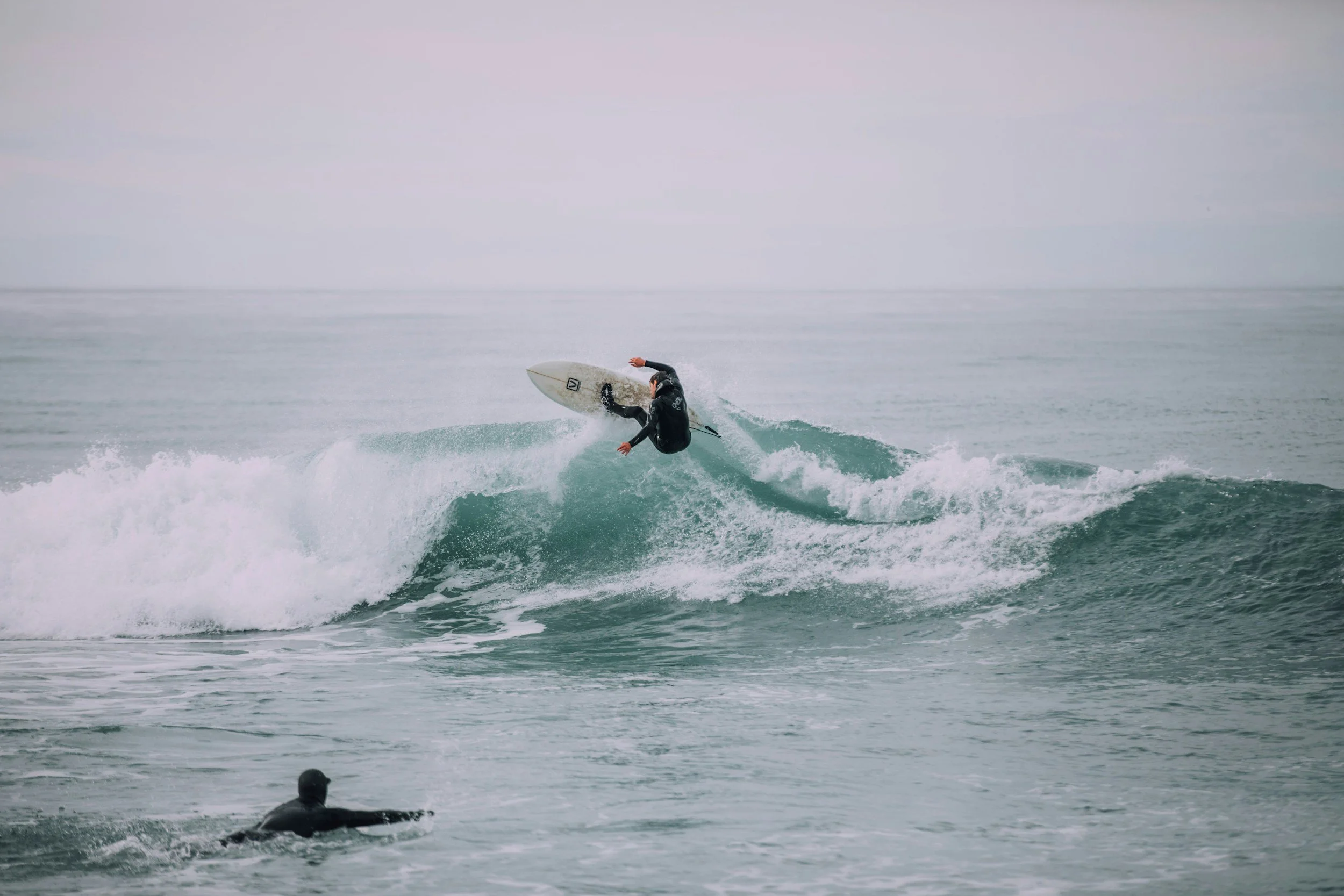
Surfing in San Diego
Written and clinically reviewed by Dr. Ashley Aguero, DC — August 10, 2026
Ask a San Diego surfer where it hurts, and a lot of them will point to a shoulder. It makes sense — we've got world-class waves and people in the water year-round. But here's the thing most surfers don't realize when they come in: the shoulder pain usually isn't coming from the part of surfing you think about. It's coming from the part you don't.
The Short Answer
Most surf-related shoulder pain in San Diego comes from paddling volume rather than a single wipeout. Hundreds of strokes a session ask for repeated shoulder elevation, rotation, and pulling, and symptoms tend to show up when that volume outpaces rotator cuff endurance, scapular control, and thoracic mobility. A mild, stable ache may be managed with load modification; pain that sharpens, worsens session over session, or brings weakness deserves an assessment.
Why Can Paddling Contribute to Shoulder Pain?
When people picture a surf injury, they picture the wave — the drop, the wipeout, the twist off the top. Those happen. But paddling accounts for a large amount of repetitive upper-extremity work during surfing and can contribute to shoulder symptoms over time.
Think about the math. On a given session you might catch a dozen waves. In between, you're paddling — hundreds, sometimes thousands of strokes. Each stroke requires repeated shoulder elevation and rotation followed by a pulling phase, performed over and over throughout a session.
That can create a high volume of repetitive shoulder motion, with some biomechanical similarities to other overhead and swimming-based activities.
So when a surfer tells me their shoulder aches, my first questions aren't about a wipeout. They're about paddle volume, session frequency, and how their shoulder and upper back move.
What’s Actually Going On in the Shoulder?
The shoulder has a large range of motion and relies on coordinated muscular and joint control during repetitive overhead activity. A few structures do most of the work:
— The rotator cuff — four muscles that contribute to shoulder stability and help control the humeral head during movement.
— The scapula (shoulder blade) — which has to glide and rotate to give the arm a stable base to move from.
— The thoracic spine (your mid-back) — which contributes to extension and rotation during overhead movement, helping distribute motion across the upper back and shoulder during the paddle stroke.
When paddling volume exceeds what the shoulder is currently prepared to tolerate, factors such as rotator cuff endurance, scapular control, thoracic mobility, training history, and recovery may influence how symptoms develop.
Common Patterns I See in San Diego Surfers
A few recurring themes:
— Front-of-shoulder ache after long sessions. This may be associated with factors such as rotator cuff fatigue, repetitive loading, or altered scapular mechanics during paddling.
— Pinching at the top of the reach. Limited thoracic mobility may contribute to changes in overhead mechanics, although pinching at the top of the stroke can have several potential contributors.
— The shoulder that's fine surfing but sore the next morning. Next-day soreness may reflect the overall training load, tissue sensitivity, recovery, or a combination of factors.
None of these are diagnoses — they're patterns. Which one you're dealing with (if any) is exactly what an assessment is for.
What Actually Helps Surf Shoulder Pain?
The approach depends on the person, but for surf-related shoulder issues it usually combines a few things:
— Addressing thoracic mobility when limited. For some athletes, improving available thoracic motion may support more efficient movement during paddling and overhead activity.
— Soft tissue work. Manual therapy, which may include cupping, IASTM, or other soft-tissue techniques when appropriate, can be used to address symptoms and short-term mobility or range-of-motion limitations.
— Adjustments where indicated — Joint manipulation or mobilization where clinically indicated may be incorporated as part of a broader treatment plan to address pain or mobility limitations.
— Targeted rehab. Progressive strengthening and endurance work for the rotator cuff, scapular musculature, and other relevant areas can help build capacity for the repetitive demands of paddling.
The goal is to address symptoms while progressively building the strength, endurance, and capacity needed for the demands of surfing.
Should You Train Through Surf Shoulder, or Stop?
The honest answer is: it depends on what the pain is doing.
A mild, stable ache that does not worsen during activity and returns to baseline afterward may sometimes be managed with appropriate load modification, depending on the individual and the findings of an assessment. Pain that sharpens as you paddle, that's getting worse session over session, or that comes with weakness or loss of range is a signal to back off and get it looked at — not to push through.
What I'd steer you away from is the middle path a lot of surfers take: ignoring it for months, paddling through, and letting a manageable pattern turn into a stubborn one. If symptoms are persistent, worsening, or affecting your ability to paddle or train, an assessment can help determine what may be contributing and whether your activity should be modified.
A Few Ways to Support Shoulder Capacity
Even without pain, a few habits may help prepare the shoulder for the demands of paddling for San Diego surfers who are in the water a lot: warming up the shoulders and mid-back before you paddle out rather than using the first ten minutes of the session as your warm-up; keeping up some rotator cuff and scapular strength work on land; and not spiking your paddle volume dramatically — gradually increasing paddle and training volume can give the body time to adapt to changes in workload.
Surfing isn’t the only overhead workload I see — if you also play volleyball, I’ve broken down what beach and indoor volleyball each ask of the hitting shoulder.
Frequently Asked Questions
Is my shoulder pain from wiping out or from paddling?
Wipeouts happen, but paddling accounts for a large amount of the repetitive upper-extremity work in a session. You might catch a dozen waves and take hundreds or thousands of strokes in between. That’s why my first questions are about paddle volume, session frequency, and how your shoulder and upper back move — not about a single wave.
Can I keep surfing with shoulder pain?
It depends on what the pain is doing. A mild, stable ache that doesn’t worsen during activity and settles back to baseline afterward may sometimes be managed with load modification, depending on your individual findings. Pain that sharpens as you paddle, worsens session over session, or comes with weakness or lost range is a signal to back off and get it looked at.
Why does my shoulder feel fine in the water but sore the next morning?
That’s one of the more common patterns I see. Next-day soreness may reflect your overall training load, tissue sensitivity, recovery, or some combination of those factors rather than one structure being at fault. It isn’t a diagnosis on its own — it’s a pattern, and working out which one you’re dealing with is exactly what an assessment is for.
Do I need an MRI before coming in?
Not usually. A first visit starts with a 60-minute assessment of your symptoms, movement, strength, range of motion, and training demands before we discuss a plan. That said, certain presentations — significant trauma, substantial weakness or loss of function, persistent night pain, or findings that raise concern for structural injury — may warrant imaging or referral to an appropriate specialist.
What can I do on my own to prepare my shoulders for paddling?
Warm up your shoulders and mid-back before you paddle out instead of using the first ten minutes of the session as your warm-up. Keep some rotator cuff and scapular strength work going on land. And avoid spiking paddle volume — increasing paddle and training volume gradually gives the body time to adapt to the change in workload.
A Note on What This Article Is Not
This isn't a diagnosis for your specific shoulder, and sports chiropractic isn't a replacement for medical evaluation. Certain presentations — including significant trauma, substantial weakness or loss of function, persistent night pain, or findings that raise concern for structural injury — may warrant additional medical evaluation, imaging, or referral to an appropriate specialist.
How to Get Started at ELATE
ELATE Chiropractic & Sports Medicine is a cash-based sports chiropractic practice in San Diego serving athletes, lifters, surfers, and active adults. We accept HSA and FSA payments and can provide a superbill for potential insurance reimbursement.
A first visit is the 60-minute initial appointment ($195), where I evaluate your symptoms, movement, strength, range of motion, training demands, and other relevant factors before discussing an individualized plan. If you're not sure whether your shoulder needs hands-on care or just a smarter paddle-prep routine, the contact form is the easiest way to ask.
Book an Initial Appointment →Explore Our Services →
Dr. Ashley Aguero, DC, is a Doctor of Chiropractic with a Sports Medicine emphasis. She holds a B.S. in Kinesiology from CSU San Marcos and a Doctorate of Chiropractic from Southern California University of Health Sciences. A San Diego native and CrossFit athlete, she has sideline experience in high school football, rugby, and cycling.
