

Neck and Upper-Back Pain: Care for Desk Workers and Lifters
Neck and upper-back tension usually comes from two places: long hours at a desk and heavy training. Often it's both. At ELATE in North Park, San Diego, Dr. Ashley Aguero, DC, looks at how you sit, how you lift and how your mid-back moves. Then she combines hands-on care with simple changes for work and the gym.
At the desk
Long periods in one position
Screen height and distance
Few breaks from sitting
In the gym
Shrugging during pulls, carries and deadlifts
Pull-up and overhead volume
Bracing that pushes tension into the neck
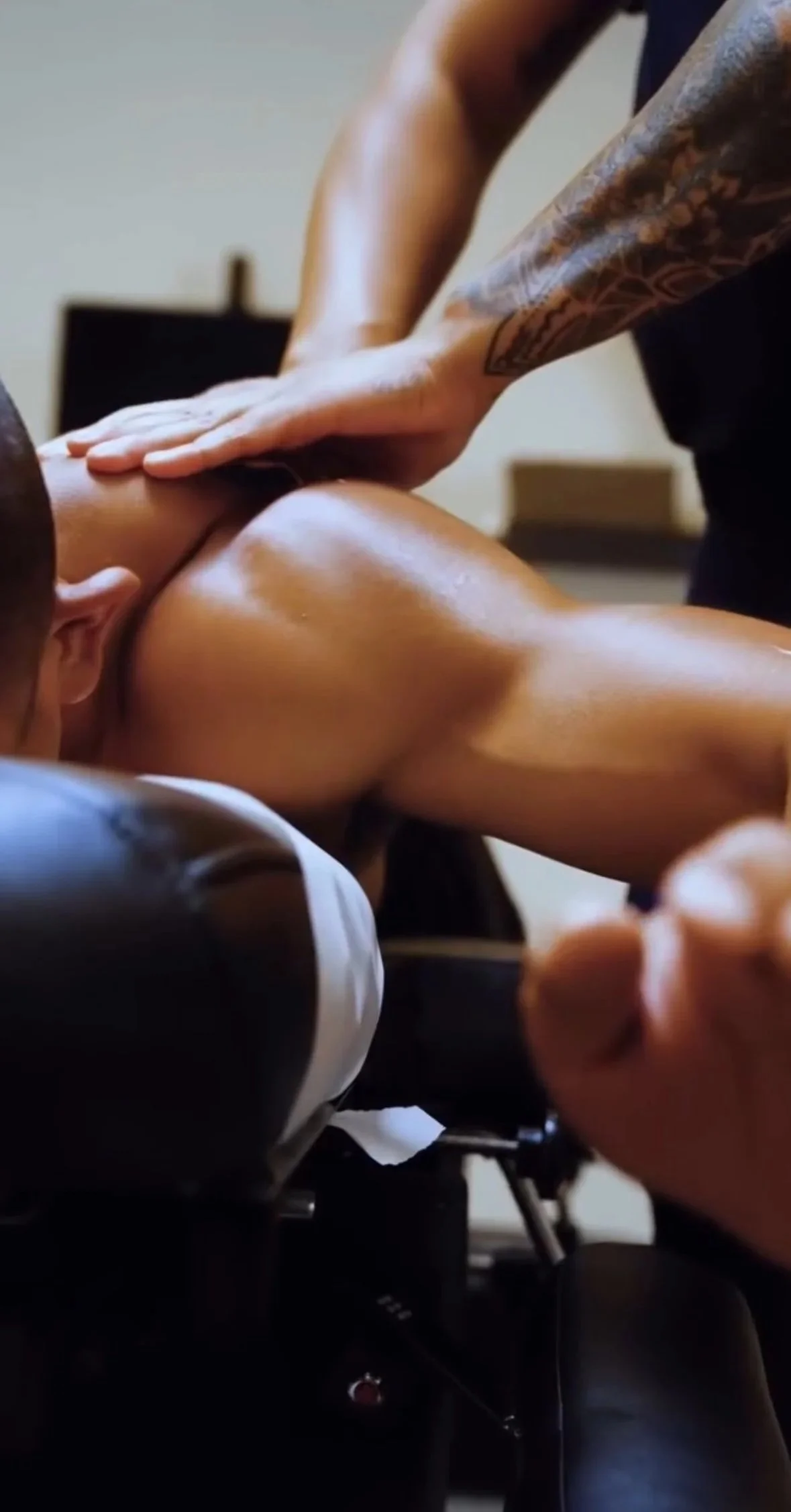
What we look at
Neck and mid-back movement
How you sit and work
How you lift, pull and press
Headaches or arm symptoms, so we know when to refer
How we help
Sports Myofascial Therapy to reduce the sensation of tightness
Mid-back mobility and upper-back strength
Small desk and training changes
We reinforce every visit with movement and training.
What you can try this week
Change position every 30 to 45 minutes
Raise your screen to eye height
Ease off shrug-heavy volume for a week
Add light upper-back work, such as band pull-aparts

When to get checked sooner
Get assessed promptly, or see a physician, if you have:
Neck pain after a fall or car accident
Numbness, tingling or weakness in the arms
A sudden, severe headache
Dizziness or changes in vision
Fever with neck stiffness
Questions we get
Can a sports chiropractor help desk workers?
Yes. Many of our patients train and work at a desk.
Do I have to have my neck adjusted?
No. We only adjust when it fits your plan and you're comfortable with it.
Can I keep training?
Usually yes, with some changes while we work.