
Sports Chiropractic for Half-Marathon Training: A San Diego Runner's Guide.
San Diego Runner’s Guide To Marathons
Written and clinically reviewed by Dr. Ashley Aguero, DC — August 10, 2026
San Diego doesn't really have a running off-season. Between Rock 'n' Roll San Diego in early summer, America's Finest City Half in August, and the fall calendar down the coast, someone is always mid-training-block. And somewhere around week four of that block, most bodies start sending notes. This guide covers what half-marathon training actually asks of your body, the complaints we see most in runners, and where sports chiropractic fits into a training cycle — including when it's worth booking.
A quick note first: this is general education, not a diagnosis. Bodies are individual, and the same complaint can have very different causes. If something's persistent or worsening, getting assessed in person beats guessing from an article.
The Short Answer
Sports chiropractic during a half-marathon block starts with assessment — your training history, when the complaint shows up, and a movement screen — then uses the tools that fit: joint mobilization or manipulation, soft-tissue work like MRT, IASTM, or cupping, and movement or exercise to reinforce it. It works alongside gradual mileage, strength work, and sleep, not instead of them. Most training-block complaints are load signals, not reasons to stop running.
What does a half-marathon block ask of your body?
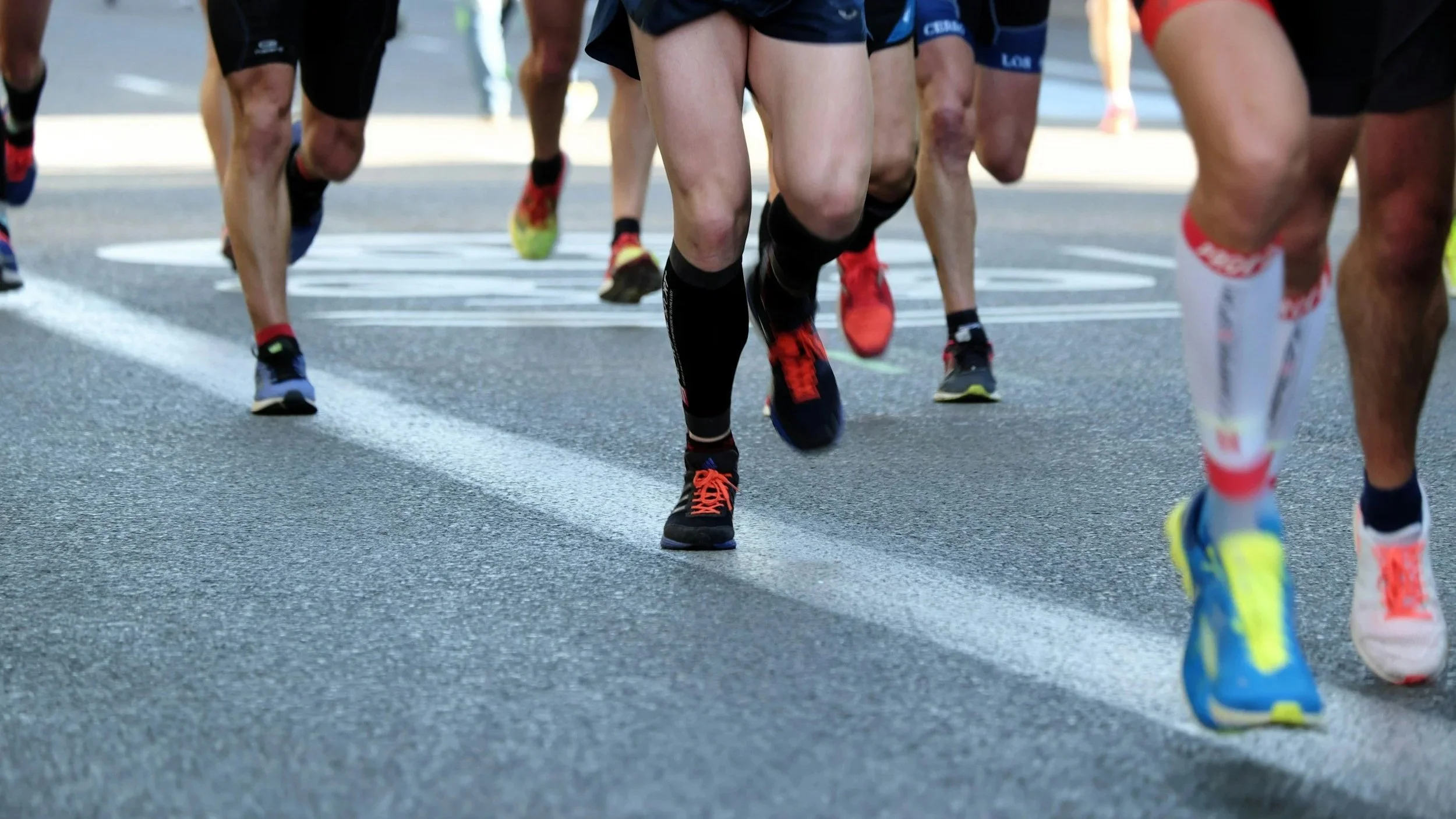
A typical half-marathon plan builds volume over ten to fourteen weeks. That means thousands of foot strikes per run, most of them on one leg at a time, repeated four or five days a week. Tissues adapt well to that kind of load — when it increases gradually and recovery keeps pace. Most training-block complaints show up when the ramp outpaces the adaptation: mileage jumps, a new shoe, added hills or speed work, or a stretch of poor sleep stacked on peak weeks.
That's worth saying plainly, because stopping running altogether is rarely the only option. It's usually about adjusting the load, addressing what's contributing, and supporting the recovery side of the equation.
The complaints we see most in runners
– Knee Discomfort — often around or behind the kneecap, most noticeable on downhills, stairs, or after sitting.
– Outer Knee Pain (where many runners blame the "IT band") — a sensation of tightness or discomfort along the outside of the thigh or knee, typically building as a run goes on.
– Lower Leg Complaints (where many runners blame the Calf or Achilles) — morning stiffness, a sensation of tightness that eases as you warm up, or soreness after speed sessions.
– Hip and Glute Complaints — a pinching sensation at the front of the hip, or deep glute tightness that shows up on longer runs.
– Foot and Arch Complaints — most noticeable on the first steps of the morning or the first mile of a run.
None of these automatically mean you should stop training. Most are signals about training load, recovery, movement patterns, footwear, or a combination of factors.
Where does sports chiropractic fit in a training cycle?
A sports chiropractic visit during a training block starts with assessment, not treatment. That means your training history, where the complaint shows up and when, and a movement screen that looks at how you load — because a knee complaint in a runner often has contributors above and below the knee.
From there, the plan is built from the tools that fit. Joint mobilization or manipulation, when appropriate, may help improve short-term comfort and mobility. Soft-tissue work — Myofascial Release Technique (MRT), IASTM (scraping), or cupping — to help reduce the sensation of stiffness or tightness and improve short-term comfort and mobility. Cupping, when used, may temporarily increase superficial blood flow and can be one tool to help with short-term symptom management. Every visit ends with movement and exercise to reinforce what we worked on in the clinic.
What sports chiropractic doesn't replace: the plan itself. Gradual mileage, strength work, sleep, and sensible pacing still carry most of the load. Care during a training block works alongside those things, not instead of them.
When in the block it makes sense to book
– Early weeks (1–6): the best time to address a new niggle. Small course corrections are easiest here, before altered movement patterns become more persistent.
– Peak weeks: when volume is highest and recovery matters most. This is where soft-tissue work and load conversation earn their keep.
– Race week: keep it light and familiar. Nothing new on race week — no new treatments, no new shoes, no new stretches.
Pre-race tune-ups deserve their own article — that one's coming later in this series.
When should you get assessed promptly?
Some signals shouldn't wait for the next long run: pain that changes your stride, sharp or localized pain that worsens as you run, symptoms that persist or worsen over a couple of weeks, night pain, or any numbness or tingling. A Doctor of Chiropractic can assess what's contributing — and determine whether further imaging or referral is appropriate. That's part of the job.
Frequently Asked Questions
Do I have to stop running to get better?
Usually not. Stopping altogether is rarely the only option. Most training-block complaints are signals about load, recovery, movement patterns, or footwear, and they respond to adjusting the ramp and addressing what’s contributing. That said, some signals shouldn’t wait — pain that changes your stride, sharp pain that worsens as you run, or anything numb or tingling deserves an in-person assessment.
What happens at a visit during a training block?
It starts with assessment, not treatment. That means your training history, where the complaint shows up and when, and a movement screen that looks at how you load — because a knee complaint in a runner often has contributors above and below the knee. From there the plan is built from the tools that fit, and the visit ends with movement and exercise.
Can I get treatment during race week?
Race week is the time to keep things light and familiar. Nothing new applies across the board — no new treatments, no new shoes, no new stretches. If you already have a routine that works, race week isn’t when to change it. Pre-race tune-ups are a separate topic and get their own article later in this series.
Does soft-tissue work like IASTM or cupping fix the problem?
Those tools are used to help reduce the sensation of stiffness or tightness and improve short-term comfort and mobility. Cupping may temporarily increase superficial blood flow and can be one tool for short-term symptom management. None of it replaces the training plan — gradual mileage, strength work, sleep, and sensible pacing still carry most of the load.
Do I need imaging or a referral?
Not usually, and that’s part of what an assessment sorts out. A Doctor of Chiropractic can assess what’s contributing to a complaint and determine whether further imaging or a referral is appropriate. Signals worth bringing in promptly include night pain, symptoms that persist or worsen over a couple of weeks, and any numbness or tingling.
Training in San Diego
ELATE Chiropractic & Sports Medicine is in North Park, San Diego, led by Dr. Ashley Aguero, DC — a sports chiropractor who trains and competes herself. If you're mid-block for a summer or fall race and your body is sending notes, an assessment is a good place to start. You'll find everything we offer on our services page.
